
| Company | Service Highlights | Pricing | |
|---|---|---|---|
| 1. | ![]() Website: Lexington Law Phone: (888) 586-1951 Lexington Law Review |

|
$59.95 per month, couples discount |
| 2. | ![]() Website: Sky Blue Credit Sky Blue Credit Repair Review |

|
$49 initially and $49 per month, spouse discount |
| 3. | ![]() Website: Credit Assistance Network Credit Assistance Network Review |
|
$145 initially and $95 per month, spouse discount |
| 4. | ![]() Website: Ovation Credit Ovation Credit Review |
|
$79 initially and $39 per month |
| 5. | ![]() Website: Veracity Credit Veracity Credit Review |
|
$69 initially and $49 per month |
| 6. | ![]() Website: DSI Solutions DSI Solutions Review |
|
$267 one time OR 3 X $89 plus $19 fee |
Latest Credit Repair Articles
Tips for Negotiating a Pay for Delete Request
One method for eliminating part of your debt load is to request from a creditor or a debt collection agency that a pay for deletion be used to settle your account balance still outstanding. For the consumer, a portion or a full amount of the balance is paid in exchange for a deletion of the account.
There are some collection agents that will lead a consumer to believe a pay for delete negotiation is not legal or they are not able to offer you the option. However, a pay for delete is an acceptable practice for negotiating debts.
Get It in Writing
A key point in a successful negotiation to delete accounts after payment is to ensure all negotiations and made agreements are put in writing. If you are sending a request for a payoff and an account deletion, it should be done by you in writing to the creditor or collection agency and mailed via the certified, return receipt requested option at the post office. It will cost you more in postage but the extra steps will give you the peace of mind that you have left a traceable negotiation on your debt.
Other Tips for Successful Deletion
Once you are able to negotiate a pay for delete scenario with a collection agency or creditor, you will need to Read more…
Christmas Credit Cards Can Hurt Credit Scores
Consumers have long been warned about the dangers of department store credit card offers. Many stores will offer seemingly excellent discounts at the cashier counter in order to entice consumers into signing up. However, while a 30% discount on your purchases may seem like a great idea at the time, it can do a number on the credit score of the card applicant.
Department store credit cards are not much different than credit cards in that misuse of the cards can drastically reduce your credit score. If you fail to pay your credit card bill on time each month you will suffer the credit consequences. If you are unable to pay your bill in full at the end of the billing cycle, the interest rates can be devastating for those who did not read the disclosure statements before committing to the department store credit card.
Consumers now have to proceed with caution around major credit cards that are also participating in the holiday shopping craze. Many credit card companies are offering specific rewards for new card holders that spend money on their Christmas gift shopping.
The initial deal may seem like a great way to save money over the holidays but many consumers will find that reality is just the opposite. Studies have shown over and over that people tend to Read more…
CreditRepair.org’s Interview with Mint.com
Though only five years old, Mint.com has quickly established itself as a highly recognized personal finance management web-service. For the uninitiated, Mint.com has been listed by Time Magazine as a top-50 website for the last three consecutive years and is the winner of the Webby Award for Excellence on the Internet for Best Financial Service in 2009, 2010, and 2011, beating out financial news giants CNNMoney, NY Times Dealbook, Nerdwallet and Yahoo! Finance.
Mint.com allows its users to aggregate their banking accounts, investments, insurance policies, IRAs and mortgages into its management system which automatically provides up-to-date categorization, support and tools for budgeting analysis and bill reminder services. Their services are essential for those wanting to take control of their financial lives and improve their credit scores. Best of all, Mint.com is completely free.
The site was conceived by Aaron Patzer in 2006 after quitting his day job as a software architect to develop a method for analyzing numerous financial documents with high accuracy. After gaining the interest of First Round Capital, Mint.com received the seed capital to further develop their concept. Patzer’s ideas ambitions became so popular that grabbed the attention of Intuit, a financial software company and maker of Quicken, which extended an offer to purchase Mint.com for $170 million in late 2009.
CreditRepair.org was granted an opportunity to gain some insight into the company from Aaron Forth, Inuit’s Vice President and General Manager of Personal Finance Group. Read more…
Credit Risk Index Falls for Seventh Consecutive Quarter
For the seventh consecutive quarter, TransUnion’s Credit Risk Index fell, indicating that consumers are eliminating their debts and defaulting on payments in fewer numbers. The index is down from 121.22 to 120.62, a 4.9 percent drop since last year.
“Increases in the percentage of consumers with new accounts with generally higher credit limits, coupled with lower utilization rates for revolving account types reflect a healthier balance of risk,” said global chief scientist for TransUnion Chet Wiermanski.
This comes as figures on consumer spending trickle in from Black Friday and Cyber Monday, which has thus far indicated a rise of 7.4 percent in credit card usage for holiday spending since last year, as reported by the Chicago Tribune. Credit card issuers have been incentivizing credit usage by boosting rewards and cash back programs, a move that is interpreted as a means of recouping losses from swipe fees attributed to the Durbin amendment of the Frank-Dodd Act, which capped debit swipe fees at 21 cents per transaction. Read more…
“Balance Transfer Day” Participants Encouraged to be Mindful of Potential Credit Score Risks
Following precedent set by the recent “Bank Transfer Day” movement, consumers who are fed up with their credit cards are encouraged to participate in “Balance Transfer Day” on Dec. 11.
Spearheaded by Music for Change: Financial Literacy Initiative — an organization that has previously preached financial awareness via musical performances —has decided to take a more proactive approach to influencing people to reconsider who they are willing to give their assets to.
Prospective participants are encouraged to transfer their high interest credit card balances to new cards with a zero percent introductory interest rate, saving them substantial amounts of money.
“The goal is to bring newborn light onto the unethical practices and regulations that the credit card industry performs on a daily basis. 29.99% on late payments is brutal in this economy,” Ellina Graypel, a spokesperson for Music for Change told Attiyya Anthony of Credit-Land.com. Read more…
The Power of Debt Validation and Credit Repair
During the process of credit repair, you may encounter a call (or several) from a debt collector trying to collect on a debt you may not be familiar with or you are not ready to deal with the present time. A powerful and effective tool for dealing with such a scenario is to request a debt validation letter. Making this request is within your right and also protects you from a potentially fraudulent scenario.
What is a Debt Validation?
Debt validation is a legal process which is part of the Fair Debt Collection Practices Act. Debt validation is a request made by a consumer to the creditor asking for proof that the collection agent making content has been assigned to collect the debt. It also helps to establish the total amount you owe as per the original creditor. Read more…
High-Tech Credit Protection Coming from JP Morgan Chase
Technology created to prevent credit card fraud from ruining a consumer’s credit is coming to JP Morgan Chase & Co to help protect card holders.
The bank, headquartered in New York is producing their new British Airways Visa card with a computer chip inside that contains account information. These computer chip cards are meant to provide more security and protection from hackers than the normal magnetized strips.
The credit card technology is becoming a standard in the overseas market and it is part of the industry standards referred to as EMV. While other countries have been utilizing the technology, American credit cards are starting to take notice. There are some considerations, however, that should be made concerning the technology. US merchants must make necessary upgrades to their credit card processing systems in order for the cards to be functional. The costs of those upgrades have made many Read more…
Protect Your Credit Score When Relocating
Relocating is stressful regardless of whether you’re moving across the country or just across the city. Things are bound to get mixed up and in the relocation process, you could make some mistakes that hurt your credit score. These are some things you can do to avoid credit-damaging mistakes when you’re moving.
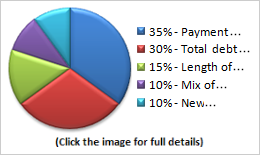
Set your bills to be paid automatically. If your bank has the capability, you can put your credit card bills on autopay for a few months until you get situated. Your credit card payment is due on the same date every month, so you can look at any recent billing statement to see which day your creditors need to be paid. Automatic payment ensures the creditors get your payment even if you forget. Payment history is 35% of your credit score, so do what you can to ensure your payments arrive on time.
Change your address. There are two ways to be sure your credit card statements follow you to your new address. First, you can contact your credit card issuers and let them know to change your address in their system. The second way is to forward your mail with the U.S. Postal Service. You can do this online or by dropping a change of address form in the mail. Once forwarding is set up, the post office may notify your creditors of your new address saving you a step in confirming your address. Note that mail forwarding typically only lasts a year.
There’s another good reason to change your address – to be sure your credit card statements don’t land in Read more…
United States has Largest Incidence of Credit Card Fraud for 2010
Consumers beware; the United States officially has the highest rate of credit card fraud in the world — a staggering 47 percent of all cases occurred in the United States.
In 2010, 3.56 billion in payment card fraud losses reported in the United States alone, with another 4.04 billion lost world wide, up more than 10 percent from 2009. The United States counts for 27 percent of the worldwide purchases, but nearly half of all credit card fraud activity, which is explained by the fact that the United States have been last on board with new security measures that have gained popularity in the rest of the world.
Credit fraud can leave a huge mark on one’s credit report and getting the credit bureaus to remove the information can be a hassle, so it’s best to avoid fraud at all costs by frequently checking credit and bank accounts online and freezing a card once fraud is suspected. Read more…
Be a Great Applicant Despite a Bad Credit Score
A bad credit score can hold you back from a lot of things – buying a car, owning a home, getting good insurance rates, and even from getting a job. Most of the time, your credit score isn’t the only factor that’s considered when you put in an application. Don’t be an all around bad candidate just because your credit is bad. Look great – on paper – even if you have a bad credit score.
Don’t keep making credit mistakes.
The older the negative information on your credit report, the better you look. So, from now on, make sure you pay all your bills on time. Remember that creditors report 30 day late payments, so if you missed your due date by a couple of days, make your payment before the next statement arrives. You’ll still face a late fee, but you’ll avoid having the late payment being entered on your credit report.
Pay off some debt.
You’re a better candidate for credit cards and loans when you have less outstanding debt. When you do have credit card balances, it looks better when those balances are below 30% of the credit limit. So, if you can’t afford to pay off all your balances, at least pay down the balances that are close to the credit limit.
Keep your applications to a minimum.
Even an applicant with a great credit score looks risky when they start applying for several Read more…
Lower Credit Consumers Are Target of Credit Card Providers
There is a new competition among credit card providers to garner the attention of consumers with so-so credit histories. New reports show that more credit cards have been provided to consumers with lower credit cards. TransUnion is reporting that 25.2% of new credit card accounts were opened by those who maintain scores less than 700.
A consumer credit score ranging from 700 and below signal that the consumer has had issues in the past making credit payments or who have run up significant balances in the past. Since the biggest push in recent economic times is to avoid poor score holders and focus on the excellent credit score holders, the results of the TransUnion research is important.
80% of all new card offers still go to consumers with top-tier credit scores. Along with the card offers, the benefits that go along with the cards have also been boosted and interest rates cut. While the top-tier credit holders have Read more…
Low Credit Scores Not Presumed to Relate to Poor Job Performance
The New York Times is reporting that a new study by Louisiana State University is about to be released which shows no link between a person’s credit score and their behavior on the job.
Many more employers have been jumping on the credit score bandwagon, pulling credit scores of potential job candidates as part of the interview and screening process for employment. Those looking to work in government jobs or in finance typically need a strong credit score to get employment offers. But now the new study is showing that a job applicant’s credit history may not have a valid link to their potential behavior at work. It is noted that employers do not actually have access to the credit scores of applicants but do get to see credit history data which is used to calculate the applicant’s score.
Over all the study conducted at LSU’s business school showed that Read more…
TransUnion Survey Shows Consumers Not Checking 2011 Credit
According to a survey conducted by TransUnion, the consumer credit reporting bureau, an estimated 56% of American consumers have not conducted a personal credit check during 2011.
Credit scores are the core of a consumer’s financial stability and since less than half of American’s with a credit history are not following through with financial expert advice – to check credit reports at least annually, if not every 6 months. Those working to improve their credit score should be checking scores more frequently.
It this day and age, consumers are doing their financial stability an injustice by staying in the dark about their credit score. Consumers will need to spend more money for basic services and products they use in their daily life if their credit score continues to stay low. More industries are looking at credit scores before providing services like utilities, rental properties, cell phones, and even employment opportunities. Low scores will guarantee more upfront security deposits and higher interest rates on personal loans and mortgages.
Financial experts have also pointed out that nearly 80% of consumer credit reports contain some kind of inaccurate information or mistake. For this reason, consumers are encouraged to regularly review credit reports and file Read more…
New York Senator Voices Concern with New Credit Reporting Agency Scores
Sen. Chuck Schumer (D-NY) criticized credit reporting agencies on Sunday for newly developed scores that have little to do with credit, including the so called “Medication Adherence Score” and the “Income Insight Score.”
FICO’s “Medication Adherence Score” is a method of determining a patient’s compliance with taking medication prescribed by a doctor which taps pharmacy data including information about length of employment, verification of home address, their age and whether they live alone or not. These metrics are compiled into score which insurance companies use to determine how much in premiums to charge, according to Schumer.
Experian’s “Income Insight Score” is a system to predict a consumer’s income, extending its results to credit card issuers and home mortgage lenders.
Schumer has requested that FCC Chairman Jon Leibowitz investigate these new ratings and the credit bureaus’ legality in withholding the information from consumers as a possible violation of the Fair Credit Reporting Act. Read more…
Credit Card Incentives Still Hurting Consumer Credit Scores
Consider the last time you signed up for a new credit card. If one of the reasons the card became attractive to you was because of additional incentives, you’ll need to realize the impact your decisions may be having on your credit score.
While the credit card industry has changed quite a bit in recent years, card companies are still willing to do what it takes to draw people in the door. Using rewards programs like free double airline miles or product giveaways at mall kiosks, credit card companies are still attracting the attention of consumers – some of whom should not be applying for any lines of new credit.
Personal financial experts tell consumers to pay careful attention to credit card offers. If your credit score is not in a good place and you apply for a credit card or two, you are actually going to trigger a decrease in the credit score you maintain. This low score indicates to lenders Read more…


Let's connect!