




Credit Repair. Increase Your Credit Score!
Rude People Have Better Credit?
 Impatient people have lower credit scores according to a study released in December 2011. But, new data shows a correlation between rudeness and high credit scores. According to a Huffington Post article, some of the rudest cities in the nation are also homes to consumers with the highest credit scores.
Based on an annual survey from Travel + Leisure magazine, New York, Miami, D.C., Los Angeles, and Boston are the top 5 rudest cities in the nation. And, Huffington Post says, 4 of those 5 cities also have credit scores higher than the national average: D.C. 686, Los Angeles 684, Boston 687, and New York 682.
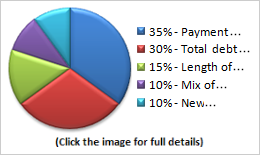
What do people in these cities have that residents of other cities don’t? Huffington Post suggests their aggressive nature keeps them on top of their accounts and paying on time. HP also points out that cities with diversity may encourage consumers to diversity their financial accounts. The mix of your credit accounts is 10% of your credit score, so having different kinds of accounts, credit card and loans, helps your credit score.
In addition, Travel + Leisure says that big cities are known for being direct. Directness can be interpreted as rude, but it might also help you get negative details removed from your credit report or convince a creditor to lower your interest rate or remove a late penalty. Read more…
FTC Gives More Guidance on Expired Debts
Debt collectors routinely try to collect on debts that they know would not be enforceable in court. They may even try to get you to restart the debt by making a partial payment or by transferring the old debt to a new credit card. But, in a lawsuit settlement with one of the biggest debt collectors, the FTC lets the debt collection industry know that collecting on expired, or time-barred debts, is not ok.
The FTC sued Asset Acceptance, a company who might be listed on your credit report, following allegations that the company violated several rules including: telling consumers they owed debt that the collector may not have been able to prove, failing to tell consumers that their debts were past the statute of limitations, and failing to tell consumers that a partial payment would extend the statute of limitations.
In addition to a civil penalty of $2.5 million, Asset Acceptance has agreed to inform consumers when their debts are too old to be legally enforceable and to let consumers know that a partial payment would essentially restart the statute of limitations on that account. Asset Acceptance also has to inform consumers when they’ve placed a negative account on the consumer’s credit report.
While a judge hasn’t signed off the terms of the settlement, they set a precedent for what the FTC expects of the collection industry. The agency has also released a new publication, “Time-Barred Debts: Understanding Your Rights When It Comes to Old Debts,” to help consumers better understand what to do about old debts.
You may know that the statute of limitations varies by states. It’s generally between Read more…
Consumer Credit Use May Indicate Better Economy
 The Federal Reserve released its monthly report for December outlining the use of consumer credit. It appears the percentage of consumers borrowing outside of mortgages has actually gone up for the month. The month of November also showed an increase making the two month span the highest rise in consumer credit borrowing in the past 11 years.
It appears more consumers are feeling confident enough to borrow on credit. The increase is mostly contributed to student loans, vehicle loans, and credit cards. This information may indicate the United States economy is rebounding and consumers are gaining their confidence back.
The data may also be due in part to banks and lenders lessening their strict lending standards. Consumer debt is also said to be falling since 2008 but the amount consumers have borrowed currently sits at $2.5 trillion which is about the same level as it was prior to the recession hitting. Read more…
Timely Rent Payments to Impact Credit Scores
New credit reporting tactics mean that rent payments may now have an impact on your credit score. So if you haven’t been faithful about making timely payments because they’re not reported to the bureaus, it’s time to change that habit.
In June 2010, Experian purchased RentBureau, a rental reporting agency that collected rental payment information. Months later, Experian began reporting timely rent payments on consumers’ reports. Those payments, in turn, were reflected in consumers’ VantageScore based on Experian report data. This year, Experian plans to begin reporting both negative and positive rental history. That means late payments can hurt you the same way that timely payments can help you.
A newer reporting agency, CoreLogic, is working with FICO, provider of the well-known credit score, to create a report and score that includes rental payment history, according to the New York Times. Timely rent payments can make it easier to rebuild a bad credit score, especially if Read more…
Consumers Encouraged to Use Credit Cards Over Debit
 There have been a lot of news headlines over the recently released card by Suze Orman, personal finance expert. Many consumers believe using debit cards keeps them out of debt and avoids high interest rates. However, if you are intent on repairing your credit score, using a card is a wiser move to make but you must do it responsibly.
Fraud is one reason consumers should consider when avoiding cards, especially when making online purchases. Debit cards do not protect you like credit cards can. If someone accesses your bank card information, they literally can access all of the cash you have in your account. Since many consumers do not notice until it is too late, this can be detrimental to your overall finances.
Another concern of personal finance experts is the lack of credit rebuilding power associated with a debit card. When you make purchases on a debit card linked to your bank, you are doing nothing to increase your own score. This can be dangerous, especially now when many industries are relying on your score to make decisions. Read more…
Financial Experts Advise Caution with Zero-Percent Balance Transfer Credit Cards
Now that the spending holidays have passed, there is a lot of consumer concern about eliminating the debts incurred on cards and starting credit repair initiatives. For consumers that overspent and now face the inability of being able to repay their debts, it is important to explore debt relief options before choosing one, especially for those considering a zero-percent balance card.
Balance transfer credit cards give consumers the option to transfer existing card balances from other cards with the theory that it is easier to pay down one debt, especially at a zero-percent interest rate. However, there are some precautions to take with a zero-percent balance transfer card.
Consumers are being advised to look at every detail of the credit card offer before signing on to transfer balances. What you don’t know about balance transfers could cost you more in the long run. It is advisable to first look at the length of time the 0% rate is being offered and be assured you can repay the balance within that time frame. Many consumers fail to realize the zero-interest offer is only for a promotional period. Once that time frame ends, the interest rate could be much higher than you can reasonably afford.
The other important aspect of balance transfer cards consumers need to understand concerns the fees for card use. Transferring of balances from other cards is not without Read more…
Pursuing the Perfect Credit Score
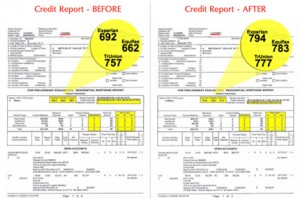 There are several news stories this week pertaining to a consumer’s quest to achieve the best credit score. Currently, lenders have set their standards for good credit scores around 730. Those that hold a score of 730 or higher are assured in getting the best options when it comes to financing a loan, obtaining car insurance, or other financial services.
While it is good news that consumers are taking a more proactive interest in their credit scores, the quest to achieve a score of 800 or more may not be as achievable as one would think. Personal finance experts are now saying that once a consumer has achieved a FICO score of 760, efforts to increase that score any higher may be ‘futile’.
Once a 760 score is achieved, consumers are not likely to find any better interest rates or financial service offers that are better than that. However, some consumers are not to be swayed. They continue their quest to achieve an 800 or better for their credit profile despite the difficulty in increasing scores after they hit 760. Read more…
Restart Old Debt in Exchange for New Credit Card?
People struggling with bad credit know how difficult it is to get approved for a new card. But what if you were given the chance to open a new card with the agreement that you’d pay off an old debt? Would you accept the offer?
In December 2011, the Wall Street Journal reported a credit card arrangement just like this. Consumers with bad scores were able to get a new card, but it required them to pay several hundred dollars per month toward an old debt. Is it worth it?
How Old Debts Become Duds
After a certain amount of time, creditors and collectors lose their power to pursue you for a delinquent debt. The statute of limitations, which determines how long you can be sued for a debt, is different for every state, but ranges from 3 to 15 years. In most cases, the statute of limitations on debt is six years or less. If a collector sues you for a debt you haven’t touched in several years, all you have to do is Read more…
Credit Repair Services – Consider the Fine Print
When you contemplate signing up with a credit repair agency in an effort to reset your financial priorities and boost your credit score, you need to know what you are getting yourself into for the long haul. Not all agencies claiming to help your score are operating on the up-and-up. Many are just in it for the money and counting on your ignorance of the law and desperation for a better score to make a fast buck.
Here are some tips to help you avoid getting taken in by countless repair scams and what you should know about their service contracts.
- Beware promises that are not realistic such as claims of ‘overnight credit repair’ or ability to remove all negative information from your report. Both concepts are impossible and in some cases illegal.
- Realize you can do everything yourself for free. Consumers have the power to repair their own mistakes. They only part of the equation they have to pay out of pocket for is the credit score information which costs about $15 from each reporting agency. Otherwise, all other work is free including filing disputes of inaccurate negative information contained in a credit report. Read more…
New California Law Prohibits Employers from Denying Job Applicants Based on Credit History
 Following precedent set in Illinois, Washington and Maryland among others, California has enacted a law prohibiting employers from rejecting job applicants based on their credit profiles.
Taking effect on Jan. 1, Assembly Bill 22 took more than three years to come to fruition, with the two prior attempts being vetoed by former Gov. Arnold Schwarzenegger.
The bill was authored by Assemblyman Tony Mendoza of Artesia who said he was inspired to write this law after his constituents expressed concern that they were being treated unfairly by the practice of screening credit reports as part of pre-employment background checks.
Companies that utilized the practice have claimed that it helps determine how reliable and trustworthy a candidate is, which has largely been refuted and disproven by recent studies. In this economy, it’s not uncommon for a person or family to rely on cards to help make it through the month, which can quickly raise their credit utilization percentage and thus bring down their credit score, regardless of whether they pay the card off in full by the end of the billing cycle. Read more…
Lenders Hope to Incorporate Social Media into Credit Scores
 Facebook users beware: your social media actions and even friends list could start affecting your credit score.
According to an article by New York Observer’s BetaBeat, new startup companies are formulating algorithms that integrate information from websites like Facebook and Twitter, which they refer to as “the social graph,” where people are recognized as “nodes,” and are connected by “edges.” In essence, the companies hope to further expand on qualifying factors for obtaining loans and also intend on shopping out loans to people in a consumer’s friends list.
Critics have already started lambasting the idea, citing that banks could use social media to obtain information they are not legally allowed to inquire about, including marital status, race, religion and a plethora of others. Read more…
No Preset Spending Limit – Can Cards Affect Credit Score Negatively?
Chase Bank recently announced a big change to its Freedom cards – the credit limit will be replaced with credit access lines, in other words the cards will no longer have a preset spending limit. The concept of no preset spending limit isn’t new, charge cards have used these spending limits for years. More cards with revolving lines are replacing the “hard” credit limit with a “soft” one that can be exceeded with no over-the-limit fee.
One of the biggest problems with the no preset spending limit is that you don’t have a physical signal telling you to stop using your card. If you have a traditional credit limit and you’ve chosen not to have over-the-limit transactions processed, you’ll get denied if you try to make a purchase that puts you over your limit. Even before you get denied at the register, you can check your available credit to see how much you can purchase. Without a credit limit, you’re prone to the type of overspending that leads to missed payments, delinquencies, and other debt problems.
Credit bureaus and scoring models handle some no present spending limit accounts in a way that hurts your credit score. Remember that 30% of your score is based on your credit utilization – the ratio of your credit card balances to their limits. Creditors who have Read more…
Consumer Credit Experts Issue ‘Slow Down’ Warning
With the pace of society today, it is no wonder consumers expect fast action for all of the financial obligations. However, financial experts warn consumers to slow down when it comes to credit repair. There is no ‘overnight’ or ‘once-and-done’ solution when it comes to credit scores and credit repair.
Proper expectations are a big part in keeping consumers on track for a better success rate at debt elimination and credit repair. When consumers go into credit repair processes with too high of expectations, failure is imminent.
This is an important topic for consumer protection because there are many agencies and individuals making promises to ‘cure’ debt problems and fix debt problems in minutes. The reality is that credit repair does not work that way. It takes several months or years to truly turn around a poor, unstable financial situation filled with debts. Unfortunately, there are many consumers desperate for help that will believe the hype and as a result they will spend money they do not have for help that does not come.
Financial experts are advising consumers, especially now that the holidays are near, to research their own power at Read more…
New Credit Score Provides more Insight into Consumers’ Financial Behavior
A new credit scoring system is being developed that aims to create a more complete depiction of a consumers financial standing, which will include payday loan applications, rental payments in collection and judgments for child support, phone bills, property tax liens, and utility bills, among many others.
CoreLogic, which was founded 1991, introduced the CoreScore credit report earlier this month as a means of giving lenders an opportunity to make better informed lending decisions, with the actual score coming in March of 2012.
All of the information included in CoreScore is publicly available which the major credit bureaus typically overlook as trivial or too complicated to track. Critics are saying that this new scoring could adversely affect low-to-mid income consumers’ ability to borrow and even find a job. Read more…
Tips for Negotiating a Pay for Delete Request
One method for eliminating part of your debt load is to request from a creditor or a debt collection agency that a pay for deletion be used to settle your account balance still outstanding. For the consumer, a portion or a full amount of the balance is paid in exchange for a deletion of the account.
There are some collection agents that will lead a consumer to believe a pay for delete negotiation is not legal or they are not able to offer you the option. However, a pay for delete is an acceptable practice for negotiating debts.
Get It in Writing
A key point in a successful negotiation to delete accounts after payment is to ensure all negotiations and made agreements are put in writing. If you are sending a request for a payoff and an account deletion, it should be done by you in writing to the creditor or collection agency and mailed via the certified, return receipt requested option at the post office. It will cost you more in postage but the extra steps will give you the peace of mind that you have left a traceable negotiation on your debt.
Other Tips for Successful Deletion
Once you are able to negotiate a pay for delete scenario with a collection agency or creditor, you will need to Read more…
Let's connect!