
| Company | Service Highlights | Pricing | |
|---|---|---|---|
| 1. | ![]() Website: Lexington Law Phone: (888) 586-1951 Lexington Law Review |

|
$59.95 per month, couples discount |
| 2. | ![]() Website: Sky Blue Credit Sky Blue Credit Repair Review |

|
$49 initially and $49 per month, spouse discount |
| 3. | ![]() Website: Credit Assistance Network Credit Assistance Network Review |
|
$145 initially and $95 per month, spouse discount |
| 4. | ![]() Website: Ovation Credit Ovation Credit Review |
|
$79 initially and $39 per month |
| 5. | ![]() Website: Veracity Credit Veracity Credit Review |
|
$69 initially and $49 per month |
| 6. | ![]() Website: DSI Solutions DSI Solutions Review |
|
$267 one time OR 3 X $89 plus $19 fee |
Latest Credit Repair Articles
Restart Old Debt in Exchange for New Credit Card?
People struggling with bad credit know how difficult it is to get approved for a new credit card. But what if you were given the chance to open a new credit card with the agreement that you’d pay off an old debt? Would you accept the offer?
In December 2011, the Wall Street Journal reported a credit card arrangement just like this. Consumers with bad credit were able to get a new credit card, but it required them to pay several hundred dollars per month toward an old debt. Is it worth it?
How Old Debts Become Duds
After a certain amount of time, creditors and collectors lose their power to pursue you for a delinquent debt. The statute of limitations, which determines how long you can be sued for a debt, is different for every state, but ranges from 3 to 15 years. In most cases, the statute of limitations on debt is six years or less. If a collector sues you for a debt you haven’t touched in several years, all you have to do is Read more…
Credit Repair Services – Consider the Fine Print
When you contemplate signing up with a credit repair agency in an effort to reset your financial priorities and boost your credit score, you need to know what you are getting yourself into for the long haul. Not all agencies claiming to help with credit repair services are operating on the up-and-up. Many are just in it for the money and counting on your ignorance of the law and desperation for better credit to make a fast buck – or in the case of credit repair scams – a fast couple thousand bucks.
Here are some tips to help you avoid getting taken in by countless credit repair scams and what you should know about credit repair service contracts.
- Beware promises that are not realistic such as claims of ‘overnight credit repair’ or ability to remove all negative information from your credit report. Both concepts are impossible and in some cases illegal.
- Realize you can do everything yourself for free. Consumers have the power to repair their own credit mistakes. They only part of the equation they have to pay out of pocket for is the credit score information which costs about $15 from each credit reporting agency. Otherwise, all other work is free including filing disputes of inaccurate negative information contained in a credit Read more…
Consumer Credit Skyrockets According to November Reports
The United States consumer credit skyrocketed up 10 percent in November. This is the biggest move upward for consumer credit in the last ten years. It is a good sign for the economy that consumer credit card spending is up as well as the fact that government student loans are on the rise.
With a jump of $20.37 billion during November, the Federal Reserve has indicated this has been the biggest increase since 2001 and comes out three times above the median forecast as predicted in a poll conducted by Reuters.
Financial experts feel that the growth is certainly a positive signal that consumers are more confident about spending on credit. However, there is a cautionary warning in place in that credit card use is up so high due to the high rate of unemployment. Lack of jobs may be prompting consumers to rely more on credit cards because they don’t have the cash to Read more…
Credit Score Requirements on Refis are Dissolved by Freddie Mac
Freddie Mac has rescinded its 620 minimum credit score for those seeking to refinance their homes so long as the home owner has equity in excess of 20 percent.
The move comes after Freddie Mac and Fannie Mae were told by Federal Housing Finance Agency in October to allow more potential borrowers to participate in low interest rates provided by the Home Affordable Refinance Program.
The actions taken are in an effort to help home owners keep up on payments whose homes are underwater with Freddie Mac and Fannie Mae servicing four million such mortgages. Read more…
New California Law Prohibits Employers from Denying Job Applicants Based on Credit History
Following precedent set in Illinois, Washington and Maryland among others, California has enacted a law prohibiting employers from rejecting job applicants based on their credit profiles.
Taking effect on Jan. 1, Assembly Bill 22 took more than three years to come to fruition, with the two prior attempts being vetoed by former Gov. Arnold Schwarzenegger.
The bill was authored by Assemblyman Tony Mendoza of Artesia who said he was inspired to write this law after his constituents expressed concern that they were being treated unfairly by the practice of screening credit reports as part of pre-employment background checks.
Companies that utilized the practice have claimed that it helps determine how reliable and trustworthy a candidate is, which has largely been refuted and disproven by recent studies. In this economy, it’s not uncommon for a person or family to rely on credit cards to help make it through the month, which can quickly raise their credit utilization percentage and thus bring down their credit score, regardless of whether they pay the card off in full by the end of the billing cycle. Read more…
Credit Card Sales Up this Christmas Shopping Season
Retailers are reporting that credit card spending by consumers is back up during the 2011 holiday shopping season. Unlike last year, consumers were not as shy about charging gift purchases to their credit cards.
Overall data shows that credit card spending was up 7 percent in November and was on the rise also for the first part of December. Credit card companies have been hoping to encourage consumers to use more plastic and the signs that they have been doing just that may mean consumer spending confidence is back on the rise.
While the news may be good for the economy, it may not fare as well for the consumer. Outside of the holiday gift shopping sprees, consumers have reportedly been spending even more thanks to the multiple credit card promotions being offered by card providers. These tactics meant to lure people into the credit card companies has been working and reports show consumers are spending more on plastic. At the end of November, several of the major card providers including American Express and Discover have reported customers are retaining higher balances on their credit card accounts than they did last year.
The still-shaky economy is happy for the boost but consumers may not be as capable as paying their credit card balances off as they should be. With lower credit scores and higher interest rates, it is harder for consumers to pay off balances in full which is the first step to burying yourself in debt.
Credit counselors have already been reporting worried phone calls coming in from consumers who overdid it during the holidays. This does not necessarily signal additional debt concerns for the new year but it is a good sign that consumers are seeing help actively before credit card payments become a problem.
Get Credit Scores On the Go
Credit score monitoring is important for consumers who need to ensure their scores are strong enough especially when considering a loan or other type of financing. Now, through today’s technologies integrated into today’s mobile phones, consumers can access their credit scores while on the go using several phone apps suitable for a mix of consumer mobile phones.
For instance, Apple has an application for its iPhones where users can received updated credit scores from the credit reporting agency Experian each month. They can also inquire about more specific information such as their ratio of available credit to their total credit limits.
The idea behind mobile access for credit scores can aid consumers in achieving better results where credit checks are used such as when you are looking at renting an apartment or a house and the landlord is interested in your credit background before approving the signing of the lease. If you are pursuing other financing such as an auto loan or a mortgage, the mobile apps will allow consumers to make more informed choices while in the moment. Read more…
Lenders Hope to Incorporate Social Media into Credit Scores
Facebook users beware: your social media actions and even friends list could start affecting your credit score.
According to an article by New York Observer’s BetaBeat, new startup companies are formulating algorithms that integrate information from websites like Facebook and Twitter, which they refer to as “the social graph,” where people are recognized as “nodes,” and are connected by “edges.” In essence, the companies hope to further expand on qualifying factors for obtaining loans and also intend on shopping out loans to people in a consumer’s friends list.
Critics have already started lambasting the idea, citing that banks could use social media to obtain information they are not legally allowed to inquire about, including marital status, race, religion and a plethora of others. Read more…
No Preset Spending Limit Credit Cards Can Hurt Your Credit
Chase Bank recently announced a big change to its Freedom cards – the credit limit will be replaced with credit access lines, in other words the cards will no longer have a preset spending limit. The concept of no preset spending limit isn’t new, charge cards have used these spending limits for years. More credit cards with revolving credit lines are replacing the “hard” credit limit with a “soft” one that can be exceeded with no over-the-limit fee.
One of the biggest problems with the no preset spending limit is that you don’t have a physical signal telling you to stop using your credit card. If you have a traditional credit limit and you’ve chosen not to have over-the-limit transactions processed, you’ll get denied if you try to make a purchase that puts you over your credit limit. Even before you get denied at the register, you can check your available credit to see how much you can purchase. Without a credit limit, you’re prone to the type of overspending that leads to missed payments, delinquencies, and other credit problems.
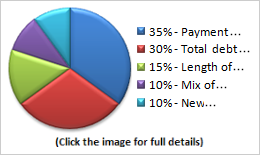
Credit bureaus and credit scoring models handle some no present spending limit accounts in a way that hurts your credit score. Remember that 30% of your credit score is based on your credit utilization – the ratio of your credit card balances to their credit limits. Creditors who have Read more…
Consumer Credit Experts Issue ‘Slow Down’ Warning
With the pace of society today, it is no wonder consumers expect fast action for all of the financial obligations. However, credit experts warn consumers to slow down when it comes to credit repair. There is no ‘overnight’ or ‘once-and-done’ solution when it comes to credit scores and credit repair.
Proper expectations are a big part in keeping consumers on track for a better success rate at debt elimination and credit repair. When consumers go into credit repair processes with too high of expectations, failure is imminent.
This is an important topic for consumer protection because there are many agencies and individuals making promises to ‘cure’ debt problems and fix debt problems in minutes. The reality is that credit repair does not work that way. It takes several months or years to truly turn around a poor, unstable financial situation filled with debts. Unfortunately, there are many consumers desperate for help that will believe the hype and as a result they will spend money they do not have for help that does not come.
Financial experts are advising consumers, especially now that the holidays are near, to research their own power at Read more…
New Credit Score Provides more Insight into Consumers’ Financial Behavior
A new credit scoring system is being developed that aims to create a more complete depiction of a consumers financial standing, which will include payday loan applications, rental payments in collection and judgments for child support, phone bills, property tax liens, and utility bills, among many others.
CoreLogic, which was founded 1991, introduced the CoreScore credit report earlier this month as a means of giving lenders an opportunity to make better informed lending decisions, with the actual score coming in March of 2012.
All of the information included in CoreScore is publicly available which the major credit bureaus typically overlook as trivial or too complicated to track. Critics are saying that this new scoring could adversely affect low-to-mid income consumers’ ability to borrow and even find a job. Read more…
Tips for Negotiating a Pay for Delete Request
One method for eliminating part of your debt load is to request from a creditor or a debt collection agency that a pay for deletion be used to settle your account balance still outstanding. For the consumer, a portion or a full amount of the balance is paid in exchange for a deletion of the account.
There are some collection agents that will lead a consumer to believe a pay for delete negotiation is not legal or they are not able to offer you the option. However, a pay for delete is an acceptable practice for negotiating debts.
Get It in Writing
A key point in a successful negotiation to delete accounts after payment is to ensure all negotiations and made agreements are put in writing. If you are sending a request for a payoff and an account deletion, it should be done by you in writing to the creditor or collection agency and mailed via the certified, return receipt requested option at the post office. It will cost you more in postage but the extra steps will give you the peace of mind that you have left a traceable negotiation on your debt.
Other Tips for Successful Deletion
Once you are able to negotiate a pay for delete scenario with a collection agency or creditor, you will need to Read more…
Christmas Credit Cards Can Hurt Credit Scores
Consumers have long been warned about the dangers of department store credit card offers. Many stores will offer seemingly excellent discounts at the cashier counter in order to entice consumers into signing up. However, while a 30% discount on your purchases may seem like a great idea at the time, it can do a number on the credit score of the card applicant.
Department store credit cards are not much different than credit cards in that misuse of the cards can drastically reduce your credit score. If you fail to pay your credit card bill on time each month you will suffer the credit consequences. If you are unable to pay your bill in full at the end of the billing cycle, the interest rates can be devastating for those who did not read the disclosure statements before committing to the department store credit card.
Consumers now have to proceed with caution around major credit cards that are also participating in the holiday shopping craze. Many credit card companies are offering specific rewards for new card holders that spend money on their Christmas gift shopping.
The initial deal may seem like a great way to save money over the holidays but many consumers will find that reality is just the opposite. Studies have shown over and over that people tend to Read more…
CreditRepair.org’s Interview with Mint.com
Though only five years old, Mint.com has quickly established itself as a highly recognized personal finance management web-service. For the uninitiated, Mint.com has been listed by Time Magazine as a top-50 website for the last three consecutive years and is the winner of the Webby Award for Excellence on the Internet for Best Financial Service in 2009, 2010, and 2011, beating out financial news giants CNNMoney, NY Times Dealbook, Nerdwallet and Yahoo! Finance.
Mint.com allows its users to aggregate their banking accounts, investments, insurance policies, IRAs and mortgages into its management system which automatically provides up-to-date categorization, support and tools for budgeting analysis and bill reminder services. Their services are essential for those wanting to take control of their financial lives and improve their credit scores. Best of all, Mint.com is completely free.
The site was conceived by Aaron Patzer in 2006 after quitting his day job as a software architect to develop a method for analyzing numerous financial documents with high accuracy. After gaining the interest of First Round Capital, Mint.com received the seed capital to further develop their concept. Patzer’s ideas ambitions became so popular that grabbed the attention of Intuit, a financial software company and maker of Quicken, which extended an offer to purchase Mint.com for $170 million in late 2009.
CreditRepair.org was granted an opportunity to gain some insight into the company from Aaron Forth, Inuit’s Vice President and General Manager of Personal Finance Group. Read more…
Credit Risk Index Falls for Seventh Consecutive Quarter
For the seventh consecutive quarter, TransUnion’s Credit Risk Index fell, indicating that consumers are eliminating their debts and defaulting on payments in fewer numbers. The index is down from 121.22 to 120.62, a 4.9 percent drop since last year.
“Increases in the percentage of consumers with new accounts with generally higher credit limits, coupled with lower utilization rates for revolving account types reflect a healthier balance of risk,” said global chief scientist for TransUnion Chet Wiermanski.
This comes as figures on consumer spending trickle in from Black Friday and Cyber Monday, which has thus far indicated a rise of 7.4 percent in credit card usage for holiday spending since last year, as reported by the Chicago Tribune. Credit card issuers have been incentivizing credit usage by boosting rewards and cash back programs, a move that is interpreted as a means of recouping losses from swipe fees attributed to the Durbin amendment of the Frank-Dodd Act, which capped debit swipe fees at 21 cents per transaction. Read more…


Let's connect!