


Defaults & bad records
How to Repair Credit After a Lender “Charge Off”
If you experienced financial difficulties at some point in your life which made it impossible for you to make payments owed to a lender – after awhile, it’s possible the lender “charged off” the account. You will need to work on credit repair after an account is charged off.
What is a Creditor Charge-Off?
When a creditor considers an account as being in charge-off status, they are essentially considering the debt as uncollectible so late in the game. The chances of a consumer paying off the total debt are slim to none. At this point, the creditor will charge-off the account, meaning they will write off the debt for their own tax purposes and claim the loss.
While the debt may be gone in the eyes of the creditor as far as collection goes, the debt you have incurred with the creditor is still very much legally collectable provided the debt is still valid. At this point, a creditor will seek out the services of a debt collector to pursue the debt.
Unfortunately for the consumer, a charged-off status will show up on your credit report and is bad news if you wish to pursue financing in the next seven years. It is about the worse mark you can get on your credit report and lenders do not
take kindly to your inability to meet financial obligations extending this far past due. You will be noted as a credit risk and find it hard to get credit for many years to come.
How to Deal With a Charge-Off
Ideally, all consumers should strive to repair their credit before a charge-off is reported to the credit bureaus. It is in your best interest to request copies of your credit reports and see where you stand. Make every attempt to negotiate the balances you owe to get current with your creditors before being sent to collections. Many creditors will be willing to take lesser amounts in order to settle the debt. Marks on your credit report will not be great but a settled account looks better to lenders than doing nothing at all.
If you have reviewed your credit reports and found that an account has been inadvertently reported as being in charge-off status, it is essential that you dispute the item with the credit reporting bureaus as well as the creditor or collection agency to have the item removed as soon as possible. Repairing inaccurate information on your credit report can significantly improve your three digit credit score, especially where a charge-off account is concerned. Since credit reporting agencies are susceptible to human error, it is always wise to regularly check your reports for such errors.
If a charge-off is correct, there is no way to remove the mark on your credit report, even if you make an attempt to pay off or settle the debt after the fact. It is mark that will drop your credit score and present you as a credit risk for future financing. If you have more than one creditor reporting a charge off, it is very important you still attempt to improve your credit score and repair your credit history in every other aspect. Seven years is a long time to wait out bad credit news so be proactive about your credit monitoring and credit repair activities.
Credit Repair Activities After a Charge Off
First, get a copy of your credit report to view the account and how it is listed on your credit report. See how much you still owe on the account, and how much of it is listed as “past due”.
Can you pay the account in full now? If so, contact the creditor and find out how to make payment and how long before the information is corrected on your credit report.
If you do not have enough money to pay for the account in full, contact the lender or the collection agency handling the account and find out what your options are. Sometimes they will accept a payment plan toward paying off an account in charge off status; other times they require a lump sum payment. If they do accept payments, ask whether or not they will also update the account on your credit report to show you are making payments. This would show any other companies viewing your credit report that you are making good on this debt – although your credit score itself would not likely improve until the account is paid in full.
Settlement of a Charge Off Account
For accounts with large balances which have charged off, you may want to consider “settling” the debt with the lender. Sometimes you can make arrangements to settle an account for much less than you actually owe. You might consider this route if you are unable to come up with the full amount to pay the account off, as the damage to your credit score has already been done. Normally, a debt settlement will lower your credit score, but since the account is already in a charge off status, settling the account for less than you owe is not going to hurt your credit score any further – making it a reasonable option for starting credit repair after an account has charged off.
You can expect most lenders to accept 70 cents per dollar owed; or perhaps as low as 50 cents per dollar owed in the form of a settlement. If they agree to your proposed settlement amount, get it in writing, including a notation that says they will update your credit reports to show the account as settled, paid as agreed. Once you’ve taken care of this settlement payment and your credit report has been updated – you will begin to see your credit score improve as you make your other payments on time.
How Are Collection Accounts Handled on a Credit Report?
When you struggle with debt issues, it likely will be no surprise to you to find that an account you haven’t been able to pay has been turned over to collections. This means your original creditor probably wrote off your bad debts and sold the account to an agency specializing in debt collections.
The biggest issue most debtors think about when accounts are sent to collections is the harassing, aggressive tactics often used by debt agencies who want their money. However, concerning your financial status, there are more important issues at stake. When your account is sent to collections it has a significant impact on your credit report and score. Read more…
Can You Recover from a Student Loan Default?
Defaulting on your federal student loans can be detrimental, not just to your credit score, but to you finances and future credit repair strategy as well. Student loan default goes on your credit report and, like other negative credit report information, remains for seven years. Defaulting on your student loans can keep you from getting access to student loans and other types of loans until you bring your loans out of default. Read more…
Heavy Debts: Why Credit Cards Aren’t Meant for Daily Expenses
If your find that month after month it is becoming more difficult to meet daily expenses using only the cash you earn from your job, it can be tempting to rely on your credit cards to ‘make it through’ until the next payday. This tact is not beneficial to credit repair or debt relief and can find you under a heavier debt burden you can’t afford to pay.
In theory, it’s nice to have the backup resource of a credit card for things you need, using your credit card as an extension of your income is dangerous territory. If you can not afford the cash to pay for the items outright, you certainly can not afford the fees and interest incurred throughout a billing cycle. Read more…
How to Know If Bankruptcy is Right?
There’s a negative stigma attached to bankruptcy, but the truth is that it’s the only way out for many consumers struggling with bad credit. When credit repair isn’t working, how do you know if bankruptcy is the path you should take?
The benefit of bankruptcy is that it temporarily stops collection activity on most of your debts. Once you file bankruptcy, you get what’s called an automatic stay. This action prevents creditors and collectors from calling you, sending letters about your debts, garnishing your wages, or levying your bank account. You may even able to stop foreclosure and eviction after filing bankruptcy. Note that some creditors may get special permission from the court to keep collecting from you. Read more…
How Should You Deal With Past Due Accounts?
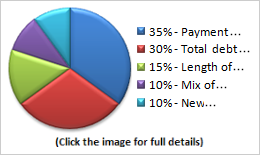
Repairing your credit involves taking care of accounts that have become past due. These delinquent accounts hurt your credit score the most because credit history has the biggest impact on your credit score. In fact, payment history is 35% of your credit score. No other factor has as significant impact on your credit score.
Types of Past Due Accounts
There are several different types of delinquencies that affect your credit score. Read more…
Old Debt Elimination Will Help Repair Credit
If you have been struggling to pay credit card bills and other debts over the last few months and fell behind on payments, your credit is being negatively affected, requiring credit repair actions. All too often people who are behind find it too hard to catch up and bills end up at collection agencies, further damaging a weak credit score. The biggest credit repair mistake you can make is letting old debts hang around. Debt does not go away, it only get bigger. With fees, penalties, and the damage it is doing to your overall financial stability, it is essential to get back on track and face old debts. Read more…
How Long Does the Bad Stuff Stay on Your Credit Report?
You may have had a few bad months or even a few bad years when debt got out of hand and financial obligations became uncontrollable. Now you need credit repair. After missing three or four payments on your credit card accounts or other bills, your credit report will begin to reflect negative payment information and your credit score will begin its decent. Each creditor reporting back non-payments to the credit bureaus will have an impact on your credit. If left unpaid, accounts on the report will reflect negative information and make repairing your credit harder.
If you are not aware of how your unpaid balances affect your credit, understand that a black mark on your report can remain there for years to come even after you paid more on the account. As a general rule, 7 years is the length of time a credit report will show an accurate negative mark but it is more complex than that.
Here are the exceptions to the 7- year rule of credit reports:
Bankruptcy
If you have filed for bankruptcy, the information will be reported on your credit history for the next 10 years.
Tax Liens
If you had a lien filed against you for taxes owed to the government, the information will remain on your credit history report for 7 years from the date you paid the debt.
Loan Default
If you have a loan with the US government or a guaranteed Read more…
Does Debt Management Assistance Hurt Your Credit?

Some people are consumed with debt and feel the walls quickly caving in. They feel they can not make it on their own and have no where else to turn. Many will make the mistake and totally give up. They will stop making any kind of payments and soon the debt collectors are incessantly calling with threats of legal action. When people get to the point of no return, it can be difficult to know what to do next. They must look outside themselves for financial help which can be a hard first-step to take.
What Are Debt Management and Credit Repair Services?
There are credit repair and debt management agencies that specialize in helping consumers better manage their debts. These services evaluate your debts, come up with a budget based on your income, and plan out the most reasonable way for an individual to become debt-free based on their income and other financial obligations. Read more…
Let's connect!